Jan
31
2012

Health Care You Can Live With – Nutrition, Emotion Management and Social Support

Posted by Dale Fletcher under Health Care & Wholeness, Spirit Mind Body Health

Again, here are my thoughts from reading Health Care You Can Live With by Dr. Scott Morris, founder of the Church Health Center in Memphis, Tennessee. The excerpts below are directly from Chapters 25, 26 and 27.

Nutrition: Food is a Gift from God

Fast foods, typically highly processed and refined, are not only bad for our physical bodies but it’s bad for our spiritual health is well. Fast food is perfect for eating alone and in a hurry – a formula for spiritual isolation. Eating alone is dangerous to your health.

For Jesus, the concept of fast food would be unacceptable. From the Gospels, we know that Jesus liked to have conversation with his meals. He used meals to create community.

We can use mealtime to nurture community while nourishing our bodies. Shared meals may take more time, but they are spiritually enriching and healthier for our bodies.

Our attitude at the Church Health Center toward nutrition is “all things in moderation.” The point of better nutrition is to build healthy, strong bodies that lead to whole people who are better connected to God. Food is God’s gift to us, and caring for our bodies with nutrition is our gift back to God.

Friends and Family: You don’t Have to Do It Alone

I’m convinced that being healthy only occurs in the midst of a community. Having family, friends, coworkers and fellow seekers of the life well lived is essential to optimum health.

Some will no doubt tell me, “all I need is willpower.” In my opinion, willpower is greatly overrated. Few of us have the innate ability to do everything necessary for health on our own. We need help. We need others to encourage us when we despair, pick us up when we fall, and walk alongside us when we tire. We may succeed in the short term on our own, but in the long term we need a team.

I’m convinced that what pulls people back from the brink of the abyss is community. Knowing you don’t have to face suffering alone is a game changer.

Family and friends are crucial to your health, and you are crucial to theirs. You receive from the community you’re part of, but you also contribute to it. Others offer qualities you need, and you offer qualities others need. Who are the people you depend on most, and what are you doing to strengthen those relationships? Who depends on you, and how are you responding to their needs?

If this (social/relational) piece of your overall health is missing, it’s not too late to surround yourself with people who care for you, and to offer relational care to others. Do this now, apart from a crisis, and a community of family and friends will be a springboard of hope when you need it most.

Emotional Life: You’re Supposed to Feel It

What we need to embrace and teach is how to get close to another human being. Doctors are trained to keep emotional distance from patients. The truth is, no one needs to learn how to be distant. Patients are connected, body-and-spirit, so why should physicians pretend they aren’t?

Life is full of emotions, some of them joyful, some of them stressful. Our health care system does not recognize that emotional and spiritual suffering can lead to physical illness.

We all have our ways of coping with painful emotions. Some push discomfort on to someone else with an aggressive comment and pay the price in that relationship. Some avoid talking about what disturbs them and hope that makes it less real, though it doesn’t. Some partition off pain and continue on with the motions of the rest of their lives, never acknowledging how unresolved emotions affect everything they do.

Stress is going to happen. It just is. Coping by making healthy choices instead of indulging old habits begins by understanding what triggers your feelings and owning up to the ways you have coped in the past.

The battles worth fighting are the ones that bring you joy and love and drive you closer to God. Save your emotional energy for things that do matter most because they deepen your experience of joy and love. Empty the trash (the strong negative emotions) on a regular basis before it gets stinky and explosive.

My Comments:

In talking with people, it sure seems that so many Americans eat on the run for many of their meals. As Morris points out, Jesus modeled a time of community and conversation when he ate his meals. This regular ‘connection’ with others – something that meals foster – is critical for our well being. We’re certainly miss out on a lot when we don’t eat meals with one another.

The medical research is clear about the importance of social support for good health. Interaction with family and friends is part of God’s design. God made us to be in relationship with others.

It is not good for man to be alone.” Genesis 2:18

Strong negative emotions, if not managed, can cause all sorts of heath-related conditions. As Morris suggests, it’s really important that we ‘take out the trash’ on a regular basis because our ‘emotional trash’ will not only affect our physical health, it will adversely affect our relational health.

Questions to Reflect On:

If you are on the go a lot and often do not eat with others in your home, are you intentional about getting together with them to experience ‘community’?

Is there at least one person in your life who you are close enough to that you can talk about important life issues with?

Could your chronic negative emotional state be affecting your health or the quality of your relationships?

Related Resources:

Article – Are Your Emotions and Thoughts Causing You Health Problems?

More Posts About This Book:

Read all the posts about this book in the category of Health Care & Wholeness

Subscribe to the RSS feed for just this category.

DiggPrintEmailShare
Jan
20
2012

Missional Spirituality – A Book Review
Posted by Dale Fletcher under Book Review

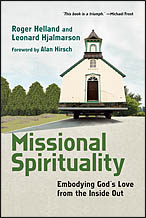
mission and spiritual transformationToday I’m reviewing the book, Missional Spirituality, Embodying God’s Love From the Inside Out, written by Roger Helland and Leonard Hjalmarson and published by InterVarsity Press in 2011.

The authors begin by making the case that it’s important to address one’s spirituality by suggesting that the root issue is that many people feel like “exiles living in a world that can’t satisfy their deepest longings.” They suggest, and I agree, that we all have a deep longing for love, security and acceptance and that it’s important that we bring our own story of brokenness into the biblical story that addresses the Father’s house as a place of wholeness, warmth and welcome.

The authors remind us that Jesus enabled people to be on mission for God with the example of the Samaritan woman at the well recounted in John 4. Here, the woman drank from the spiritual well of Jesus and became a ‘spiritual spring’ to her local towny as a missionary. This is just one example of how Jesus was doing his Father’s work, or will.  Through his interaction with the woman at the well she grew spiritually, and from that was able to be on mission herself. Jesus met her deep needs and, from a greater sense of wholeness and wellness, she was then able to go into her local town and make a difference. This is a beautiful example of missional spirituality.

Missional Spirituality – A Definition. The authors state, “the extent to which we are transformed is the extent to which we can bring transformation. A missional spirituality moves from the inside out. We can’t give what we don’t have, and what we have to give is who we are. Christians must be real-life models of Christ’s words and works. A missional spirituality is fundamental to discipleship. Missional means to participate in God’s mission as he and we work out his will in the world. Spirituality means to live in and by the Holy Spirit. We are spiritual to the extent that the Spirit’s presence permeates our lives and our churches in ways that can only be explained as God’s work.”

Helland and Hjalmarson point out that it is the spiritual disciplines that form us and it’s doing the Father’s will (being on mission for him) that will feed us. They remind us that Christian spirituality is the inward shaping for the outward expression of God’s love.

The book points out that the essence of God’s Spirit is love. Love of God and others that comes from within our hearts.  Consequently, our hearts must be well for us to love well and to be on mission well.

Discipleship. “The evidence of true discipleship, according to Jesus, is whenever we bear much fruit. The key is then that we learn how to live in Christ not just to learn about Christ. Imagine the potential wheels we developed as the core curriculum in our newcomer orientation classes and small groups biblical teachings and practices that equipped people to do well in Christ. Imagine the fruit of such a focus!”

The authors also remind us that the telos – the main purpose – of life is to glorify God by being Christlike. And, it’s the Christian virtues in us that our Creator tourist takes that are the characteristics that reflect God’s beauty in us.

“To love God from all our strength is to employee her possessions, our health and our talents in serving him and glorifying him.”

The authors also pace an emphasis on the importance of maintaining a Sabbath. Regular resting is critical to being able to love God with all of our strength. That it’s important that we the rest from the daily toils of life otherwise we would not have the strength and ability to serve God and others with our time and with the talents that he has given to us.

Measuring Spirituality.  They point out that what we measure indicates what we value and place a focus on. The authors write, “what would it take to develop qualitative measures to reveal the extent to which people love God and neighbor? Did not Paul have a qualitative idea of the extent to which the Colossians and Thessalonians practiced faith, hope and love (Colossians 1:4–6; 1 Thessalonians 1:3)? What would it take to develop ways to measure intentional spirituality in our personal and corporate lives – for example, the extent to which people practice union with Christ, gratitude, prayer, scripture reading, hospitality and measurable activity in their community and workplace? What telos do we have in mind that we use as the goal or standard for measuring? What we focus on and give leadership to tends to grow.”

Their bottom line. It’s about being transformed inwardly and then being intentional and heartfelt in choosing to love others in practical ways outwardly. That’s missional spirituality.

Helland and Hjalmarson did a great job of making their points about the greater purpose of discipleship and spiritual transformation. I gladly recommend this book, especially for those who are responsible for coordinating spiritual formation initiatives within their ministry or church.

A special thanks to the folks at InterVarsity Press for making Missional Spirituality available for my review.

DiggPrintEmailShare
Jan
16
2012

2011 in Review

Posted by Dale Fletcher under Uncategorized

At the beginning of each year, I have made it a practice to share a few of these lists with you believing you might find them both interesting and helpful.

There were over 177,000 visits to the website in 2011.

Most Read Blog Posts in 2011

  1. 30 Daily Positive Affirmations Using Bible Verses on Twitter
  2. God Gives Strength – Isaiah 40:28-31
  3. Your Heart – Proverbs 4:23 and 17:22
  4. Find Strength in God When Stressed – 1 Samuel 30:6
  5. Jesus on Stress Management – Matthew 11:28-30

Top 5 Keywords Used to Visit the Site in 2011

  1. Positive Bible Verses
  2. Scriptures on Strength
  3. Bible Verses About Health
  4. Scripture for Strength
  5. Scriptures on Stress

Top 5 Referring Sites of 2011

  1. www.TheTextThisWeek.com
  2. www.Facebook.com
  3. www.FaithandFitnessMagazine.net 
  4. www.christianpost.com
  5. www.ChurchHealthReader.org

A big ‘thank you’ to the owners of each of the above websites for linking to the site!

DiggPrintEmailShare
Jan
11
2012

Why is Obesity in the Church So Prevalent?

Posted by Dale Fletcher under Obesity, Pastors & Ministry LEaders, Religion and Health

Are the pastors of our churches in America, in general, neglecting to address the obesity issue that our country is challenged with?

My answer would be yes, otherwise research studies would not consistently show that people who attend church regularly are more obese than people who do not attend church.

But, I believe that there’s a bigger issue. (No pun intended) I think that church leadership has a responsibility to make the health of its members an intentional focus – a priority. Since our physical bodies are the temple of the Holy Spirit, pastors should make caring for our bodies – our health – a priority.  1 Corinthians 6:19

I hope you’ll take a few minutes to read my recent blog about this on the Christian Post – Obesity in the Church. It’s Time for Pastors to Make a Resolution.

DiggPrintEmailShare
Jan
10
2012

Health Care You Can Live With – Balance and Goal Setting
Posted by Dale Fletcher under Health Care & Wholeness

Here are my thoughts from my reading of Health Care You Can Live With by Dr. Scott Morris, founder of the Church Health Center in Memphis, Tennessee. The excerpts below are directly from Chapters 23 and 24.

Discover the Balance

When new patients come to our facility without an urgent illness we don’t start with the doctor; we start with a health coach. The health coach identifies areas where the patient seems to be doing well, along with the areas of everyday life that may be negatively affecting health. After this 30 minute session, the nurse enters the process in the way you would expect in most clinics, and then the patients see the doctor.

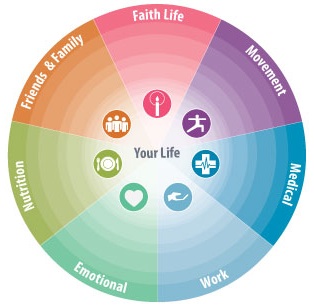
Life is a complicated web, interconnected at every turn. The various parts of our lives bump up against each other. Virtues are marching orders for how to live. They are overarching ideals that we must translate into specific actions – how to accomplish change. Our Model for Healthy Living is a tool for individuals to use to take charge of their own health care, and it reflects that true wellness is not just about our bodies, but about body-and-spirit. We illustrate visually how seven key dimensions of our body-and-spirit experience overlap at the core of our lives.

Nutrition, Friends and Family, Emotional Life, Work, Movement, Medical Care, and Faith Life are the key components of the model.

It’s all about balance. Not one of the seven elements in the Model for Healthy Living is more important than any of the others. If you ignore one, the whole mobile goes out of balance. If you overemphasize one, the whole model goes out of balance. If you touch one part of a mobile, the whole mobile moves, respondents, and readjusts. These seven elements are present in every person living in a healthy way, body-and-spirit. The Model for Healthy Living gives you some framework for change. Specific goals in the seven areas will get you where you want to go.

Make Goals You Can Keep

The starting point (for taking charge of your health) is understanding that you are a body-and-spirit being created and loved by God. When you grasp this, you glimpse the level of health – wholeness, well-being, connection to God and others – that God means for you to experience. As you take the turn toward wholeness, the virtues of Colossians 3 surround you: compassion, kindness, humility, gentleness, patience, forgiveness and love. You receive these graces from God and more and more learn to give them to others and yourself. This is the context where change can succeed.

Therefore, as God’s chosen people, holy and dearly loved, clothe yourselves with compassion, kindness, humility, gentleness and patience. Bear with each other and forgive one another if any of you has a grievance against someone. Forgive as the Lord forgave you. And over all these virtues put on love, which binds them all together in perfect unity.” Colossians 3:12-14

To begin with, meet yourself where you are. Then you can begin to make changes that will take you where you want to go. Don’t expect drastic changes overnight, but recognize the value of any forward movement, no matter how small it seems at first. You get where you want to go one step at a time. Changed behaviors will take you where you want to go.

Behavior changes when you name the new habit. Name the specific habit you want to form, and picture yourself doing it, one step at a time. Behavior changes when you see progress. Progress is something you can measure. Rather than saying, “Get some exercise,” say, “I will walk with the dog around the park and back every Monday, Wednesday, and Friday afternoon.”

A strong goal statement will have a verb at the core. It will map out what you will do and how often or by when you will do it. Example – “In the next two weeks, I will experiment with six different pieces of exercise equipment for 30 minutes each, and rank them in order of how much I enjoy them.” Break down big goals into specific action steps you can take within a definite period of time. Each action, when accomplished, leads to the next action statement that takes you closer to where you want to be.

Set SMART Goals

S = specific, simple, signification
M = measurable
A = actionable, achievable, attainable
R = realistic, relevant
T = timely, time bound

My Comments:

We are certainly a multifaceted, multi-part being. What happens to a part of us or to an aspect of our lives will invariably affect another aspect of us. To be whole – to be healthy – it’s important that we address each component in Morris’ Model for Healthy Living.

I’ve used the SMART goals concept for many, many years in working with people in my wellness programs and in my Christian wellness coaching.  I believe it to be a very helpful acronym when a person sets any goal for their lives, especially health behavior-related goals. So many people set a goal for themselves without really preparing how to achieve the goal. Applying the SMART acronym can help in addressing aspects of the goal that are important to be successful.

Where there is no vision, people perish…” Proverbs 29:18a

In that we are in the second week in January, a time in which many people set goals for themselves, I hope that the above information on SMART goals is be helpful.

More Posts About This Book:

Read all the posts about this book in the category of Health Care & Wholeness

Subscribe to the RSS feed for just this category.

DiggPrintEmailShare
Jan
02
2012

The Old Year Has Gone. The New Year Has Come. 2 Corinthians 5:17

Posted by Dale Fletcher under Weekly Faith and Health Scripture Devotional

new habits in a new yearIt’s a new year. The key here is that it is a ‘new’ year, not an ‘old’ year.

Looking back at the old has it’s purpose …. as long as we don’t stay there.  Looking back is helpful to understand, but not helpful if we dwell on past events and circumstances and relationships.

Paul reminds us that we are new creations in Christ. He tells us that the old has passed and the new has come.

“Therefore, if anyone is in Christ, the new creation has come:The old has gone, the new is here!” 2 Corinthians 5:17

He also tells us that we are to put off the old and put on the new.

“You were taught, with regard to your former way of life, to put off your old self, which is being corrupted by its deceitful desires; to be made new in the attitude of your minds; and to put on the new self, created to be like God in true righteousness and holiness.” Ephesians 4:22-24

New health habits can be adopted by looking ahead and asking Christ to renew you by the power of the Holy Spirit who lives in you. Remember, if you are a believer, the same power that rose Christ from the dead is available to you because God’s Spirit is in you. John 14:17 The more you surrender to him and depend on him – the more you put on Christ – the more his power is able to help you make changes in your life.

As you head into 2012, take Paul’s instruction to heart. It’s a new year. Think new, not old. Put on Christ, not your old self. Look ahead and don’t dwell on the past.

Happy New Year!

DiggPrintEmailShare